Bad gas turns good
Despite its deadly reputation, the gas carbon monoxide (CO) could actually save lives and boost health in future as a result of leading-edge UK research.
Despite its deadly reputation, the gas carbon monoxide (CO) could actually save lives and boost health in future as a result of leading-edge UK research.
| |
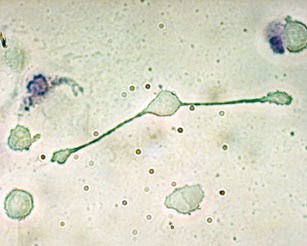
| In small amounts CO can reduce the activity of macrophages following transplantation - reducing the chance of rejection. (Picture source - Obli at en.wikipedia originally from magnaram on flickr) |
The researchers have developed innovative water-soluble molecules which, when swallowed or injected, safely release small amounts of CO inside the human body. “The molecules dissolve in water, so they can be made available in an easy-to-ingest, liquid form that quickly passes into the bloodstream,” says Professor Brian Mann, from the University’s Department of Chemistry, who led the research. “As well as making it simple to control how much CO is introduced into a patient’s body, it will be possible to refine the design of the molecules so that they target a particular place while leaving the rest of the body unaffected.”
Although the gas is lethal in large doses, small amounts can reduce inflammation, widen blood vessels, increase blood flow, prevent unwanted blood clotting - and even suppress the activity of cells and macrophages which attack transplanted organs. However, the problem has been finding a safe way of delivering the right dose of CO to the patient.
Conventional CO inhalation can run the risk of patients or medical staff being accidentally exposed to high doses. The new CO-releasing molecules (CO-RMs) - developed in partnership with Dr Roberto Motterlini at Northwick Park Institute for Medical Research (NPIMR) - can be designed to release CO over a period of between 30 minutes and several hours, depending on what is required to treat a particular medical condition.
The researchers hope that as well as boosting survival rates and cutting recovery times, the new molecules could ease pressure on hospital budgets by reducing the time that patients need to spend in hospital, for example after an operation.
Professor Mann said: “This project provides an excellent example of how non-biological sciences like chemistry can underpin important advances in healthcare.”