Biodegradable Microbowls
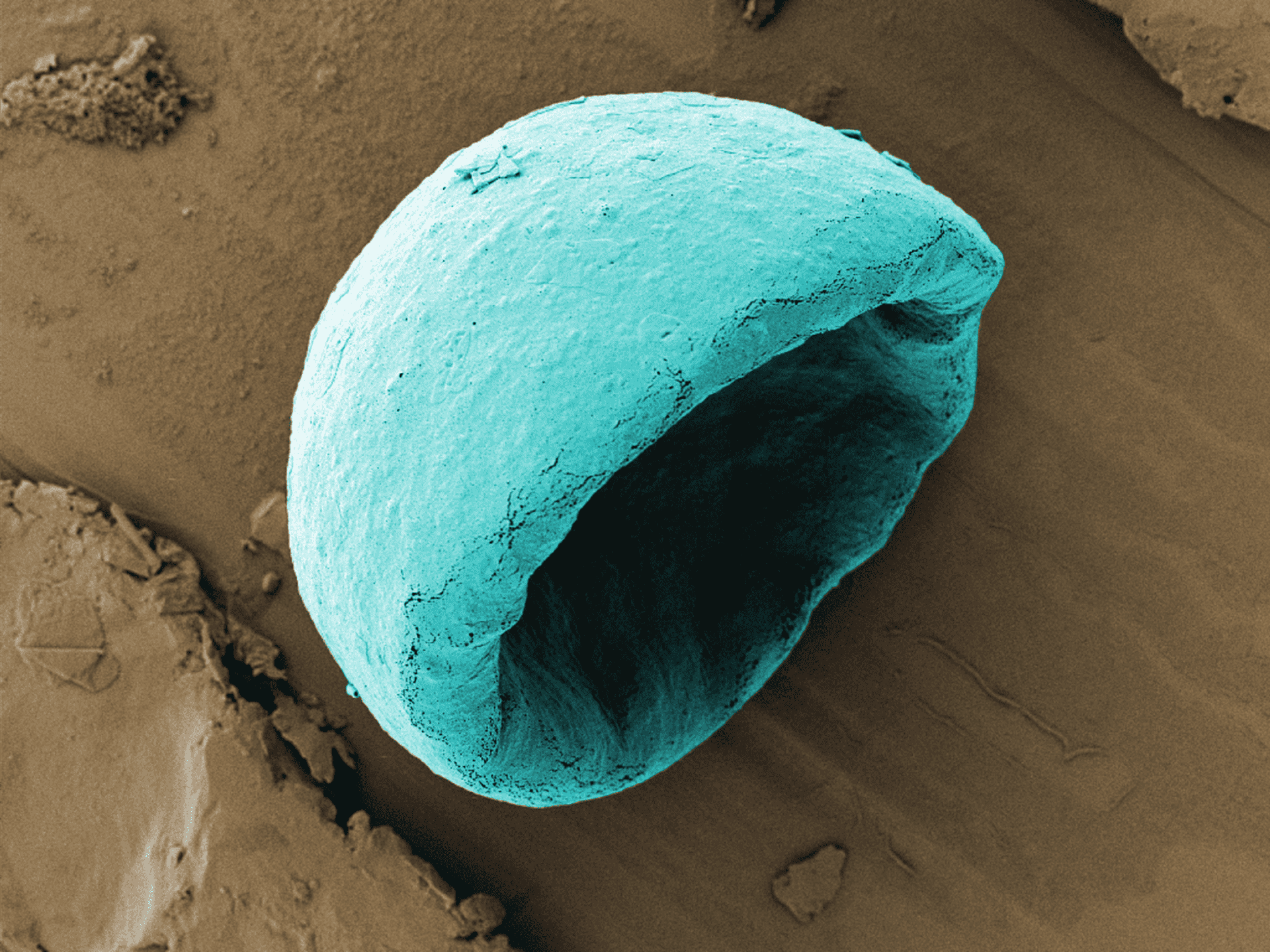
Biodegradable Microbowls by Tayo Sanders II from the University of Oxford. Many tumours lack an extensive network of blood vessels, making it difficult for anti-tumour drugs to reach their deeper regions. However, if bowl-shaped particles are injected with the drug, gas can be trapped in the particle’s cavity. If ultrasound is then applied, the trapped gas will oscillate, causing the surrounding fluid to be moved rapidly and be forced into the tumour, carrying the drug along with it, allowing the drug to penetrate further into the tumour.
Credit: Tayo Sanders II/Institute of Biomedical Engineering - University of Oxford/EPSRC Photography Competition 2017
Related Content

Rise in biochemical and chemical engineering UCAS numbers
Recent UCAS data has revealed a growing interest in biochemical and chemical engineering, says the Institution of Chemical Engineers (IChemE). The …

When plasma leaves the laboratory
The orbital laboratory is evolving into something more ambitious, a controlled industrial environment for producing next-generation materials, explains Ed Smith and Andrew Griffiths. …

Lab gloves could inflate microplastics readings suggests study
Scientists may be overestimating their assessments of microplastics pollution, with the cause lying literally in their own hands, suggests a …