Don’t be a spoilsport
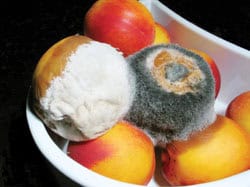
Rapid detection of yeasts and moulds is vital in preventing premature food spoilage
Rapid detection of yeasts and moulds is vital in preventing premature food spoilage
Yeasts and moulds are highly efficient at causing foods to spoil and are a problem for most food manufacturers. There are several factors that enable these microorganisms to colonise a wide range of foodstuffs:
• Some species can grow over a wide pH range, enabling them to survive in very acidic environments, such as fruit juices and pulps.
• Some can tolerate extremes of temperatures. The temperature range for the growth of yeasts is 0-47°C. Many species are able to grow at low temperatures and at low pH, making them a particular problem for fermented milk products.
• Many species are xerotolerant (able to grow in environments with very low water activity - aw as low as 0.65), and can grow in foods such as dried fruits, nuts, grains and spices. Other osmophilic and halophilic species are able to grow in environments with high osmotic pressure due to the presence of sugar or salt respectively. Such organisms can be a particular problem for bakery products and dried/cured meats.
• Certain species can withstand treatments used to minimise bacterial contamination. For example, many meat processors use irradiation, high hydrostatic pressure technology or organic acid treatment to kill bacteria. With competition from normal bacterial flora reduced, yeasts and moulds are able to grow more freely.
Often, spoilage due to yeasts and moulds is clearly visible as patches of mould or discolouration on the surface of the food product, allowing it to be disposed of prior to consumption. However, in many instances, spoilage is indicated by gas production and/or tainted flavours, affecting the smell and/or the taste of the product. Such spoilage may not be detected until consumption of the product. In either situation, it is undesirable to both the consumer and manufacturer to allow this to happen.
Yeast and mould spoilage can cost the manufacturer dearly. For example, using raw materials contaminated with yeasts or moulds can result in the rejection of numerous batches of final product. There is also the cost of product disposal, followed by investigations and cleaning/sanitising procedures to prevent further spoilage of future batches. However, if prematurely spoiled products reach the marketplace, the costs can be far more extensive. The appeal of the product may diminish and the brand image may suffer, with negative effects on reputation and future sales. Such events may even damage consumer perceptions of the retail outlet where the product was purchased and may be harmful to business partnerships. Food spoilage by yeasts and moulds can be a very expensive and costly affair.
In order to avoid such disastrous consequences and to ensure consistent taste and quality, food companies invest a great deal of time and money improving their manufacturing processes. Yeast and mould levels need to fall within acceptable limits prior to the food leaving the factory. Food companies will perform yeast and mould counts on raw materials and final products in order to monitor these levels and to determine a suitable shelf life for each product.
 |
| The BAX system, yeast and mould assay |
Traditionally, yeast and mould screening procedures are culture based. The choice of culture medium will depend on the type of food to be tested, as this will affect the species expected to grow. The most commonly used media include Potato Dextrose Agar (PDA). This medium is particularly suitable for dairy products1, fresh meat surfaces, cured meats and sausage products2, and for heat resistant moulds in thermally processed fruits and fruit products. Oxytetracycline-Glucose-Yeast Extract Agar (OGYEA) is based on a formulation described by Mossel et al3, this medium suppresses bacterial growth (including lactobacilli) at neutral pH, increasing yeast and mould counts from a variety of foods. However, very proteinaceous foods and higher incubation temperatures (~35°C) may inactivate oxytetracycline. Rose-Bengal Chloramphenicol Agar (RBCA) is recommended for fresh proteinaceous foods with a flora consisting mainly of Gram-negative rods4. Chloramphenicol is very stable, making it suitable for high temperature incubations5 and the Rose-Bengal dye colours colonies of interest whilst controlling the size and height of mould colonies4. Overgrowth of slow-growing species is, therefore, prevented and more accurate colony counts can be obtained. Dichloran Rose-Bengal Chloramphenicol Medium (DRBCM), described by King et al6, is a modification of RBCA to further inhibit bacterial growth and reduce the spreading of moulds, such as Rhizopus and Mucor spp. Dichloran-Glycerol (DG18) Agar, described by Hocking and Pitt7, is recommended for xerotolerant moulds from dried/semi-dried foods, such as dried fruits, spices, confectionery, cereals, nuts and dried meat/fish products. Aspergillus Flavus Parasiticus Agar (AFPA), described by Pitt, Hocking and Glenn8, is used for the rapid detection of mycotoxin-producing Aspergillus flavus and Aspergillus parasiticus. Target colonies develop an intense yellow/orange colour on the reverse of the colony, allowing them to be easily differentiated.
Cultural plating methods are described by the FDA Centre for Food Safety and Applied Nutrition in the Bacteriological Analytical Manual9. International Standards (ISO/DIS 21527 -1 and ISO/DIS 21527-2) for the enumeration of yeasts and moulds by colony count technique for products with a water activity (aw) greater than 0.95 (part 1) and aw less than 0.95 (part 2) are also under development. In general, once prepared, plates must be incubated for at least 5 days before the number of colony forming units in a sample can be counted. These counts are compared to alert and action levels set by individual factories to determine if they fall within acceptable limits.
Culture techniques have been used for many years and are still the preferred method of choice in certain circumstances. However, waiting for up to five days for cultural results can be problematic for some manufacturers, particularly in the production of fresh products with short shelf-lives. Methods giving quicker results can represent significant savings to manufacturers of such products.
Some drink manufacturers may use fluorescent microscopy for the quantification of viable and non-viable yeasts in beverages9. Since it does not rely on lengthy incubation periods, this method is quicker than culture-based methods. However, it is labour intensive and highly subjective, requiring an element of experience and expertise.
A new rapid method for the threshold quantification of yeasts and moulds in food has recently been launched. This new method offers considerable time-savings compared to current culture techniques. The new DuPont Qualicon BAX System Yeast and Mould PCR Assay (Figure 1), which is available from Oxoid in Europe, Canada and Australia, provides same day yeast and mould results for samples containing >500cfu/g (direct method), or 2 day results for samples with 10-500cfu/g (enrichment method).
(Figure 1: The BAX System Yeast and Mould Assay)
The BAX System method is extremely easy to perform and requires little hands-on time. For the enrichment method, homogenised sample is enriched for 44 hours in the supplied disrupter tube. For both the direct method and the enrichment method (following incubation), DNA stabiliser is added and the tubes are agitated for 15 minutes prior to lysis and processing in the BAX System cycler. After just 4 hours, the system displays positive (above threshold) or negative (below threshold) results. The target threshold is set according to the action levels of each individual laboratory, validated against historical plate counts for specific food products. The system detects yeasts, moulds and spores, ensuring accurate and reliable results, and has been tested on a variety of foods, including cheese and flour products.
The BAX System is highly regarded around the world and is used by many leading food processing companies to detect food-borne pathogens and other target organisms in raw ingredients, finished products and environmental samples. It is the first and only automated testing system to offer both food safety and food quality testing on the same platform. The recently released BAX System Q7 offers Real Time PCR capability. These Real Time PCR assays allow for species differentiation as well as quantification – all from the same sample – thereby providing additional applications to meet the diverse needs of the global food industry.
 By Ian Sheldrake. Ian is industrial products manager for Oxoid.
Related Content

Siemens recognition for Bürkert enables improved development
Fluid control specialist Bürkert has become an official Siemens Product Partner for Siemen’s SIMATIC Automation Systems. The new partnership will …

Innovation in dialysis equipment
In 2022, more than 30,000 people were undergoing kidney dialysis in the UK [1], all of whom will require precision …

Liebherr launches new under-bench fridge and freezers for lab and healthcare providers
Liebherr, specialists in commercial refrigeration, have introduced its new range of under-bench fridges and freezers, engineered to meet the diverse …