
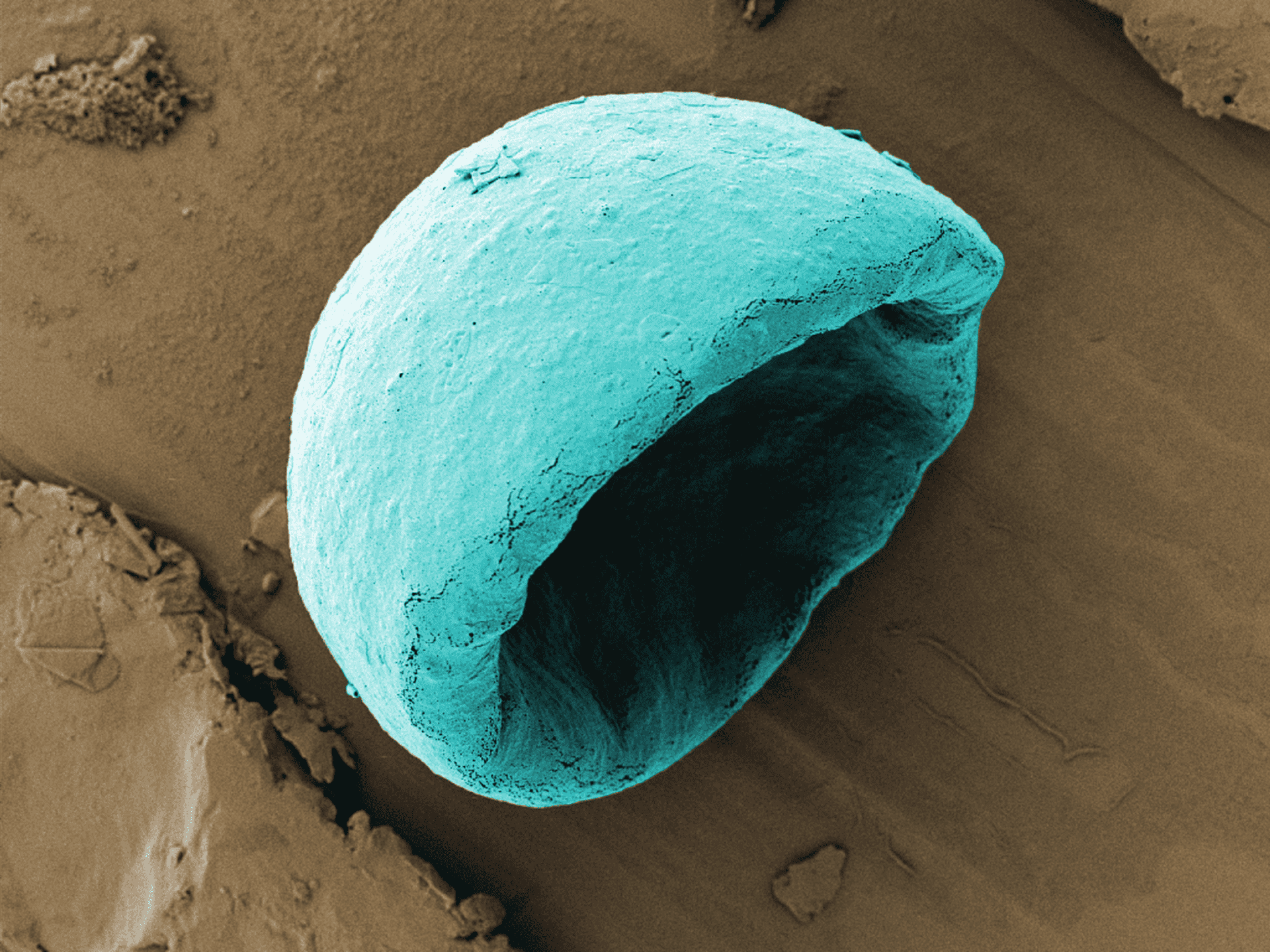
Biodegradable Microbowls

Biodegradable Microbowls by Tayo Sanders II from the University of Oxford. Many tumours lack an extensive network of blood vessels, making it difficult for anti-tumour drugs to reach their deeper regions. However, if bowl-shaped particles are injected with the drug, gas can be trapped in the particle’s cavity. If ultrasound is then applied, the trapped gas will oscillate, causing the surrounding fluid to be moved rapidly and be forced into the tumour, carrying the drug along with it, allowing the drug to penetrate further into the tumour.
Credit: Tayo Sanders II/Institute of Biomedical Engineering - University of Oxford/EPSRC Photography Competition 2017
Related Content

Nobel Prizes 2026 science winners named
This year’s three Nobel Prizes for natural science have been shared by six laureates from the USA, Germany, Japan and …

When seeing is no longer believing
Artificial Intelligence (AI) is polluting the world of science. Online teaching and reference resources are suddenly being populated by images …

£25m challenge targets unanswered questions in upper gastrointestinal cancers
Scientists worldwide are being invited to tackle two major unanswered questions about stomach and oesophageal cancers through a new £25 …

